

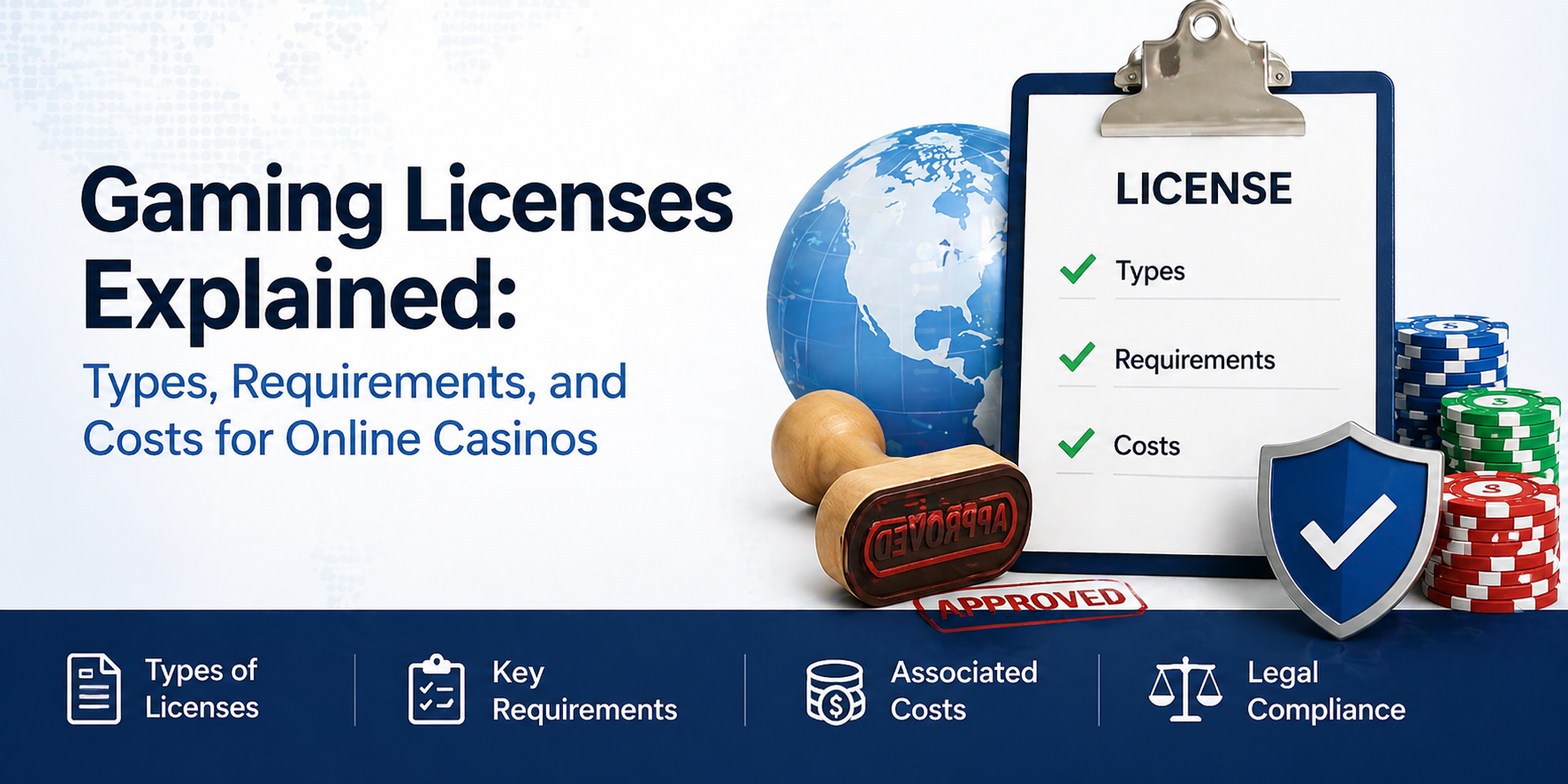
Introduction
If you’re planning to launch an online casino, one question sits at the very foundation of your entire operation: do you have the right gaming license?
A gaming license isn’t just a legal formality. It’s the backbone of your platform’s credibility, the key to unlocking payment processors, and the signal to players that your casino operates fairly and transparently. Without one, even the most beautifully designed platform with the best games will struggle to attract serious players or reliable banking partners.
But navigating the world of gaming licenses can feel overwhelming. Different jurisdictions, varying costs, different compliance requirements — it’s a complex landscape that every operator needs to understand before going live.
In this guide, we break down everything you need to know about gaming license types, requirements, and costs — so you can make the right decision for your online casino business.
Why Does a Gaming License Matter?
Before diving into the types, it’s worth understanding what a gaming license actually does for your business:
- Legitimacy — Players trust licensed casinos. A visible license builds confidence and reduces drop-off at registration.
- Payment Processing — Most reputable payment gateways and banks require a valid license before onboarding a casino operator.
- Game Provider Access — Top-tier game providers like those available through TTWD only supply their content to licensed operators.
- Legal Protection — Operating without a license exposes you to fines, shutdowns, and even criminal liability in many jurisdictions.
- Market Access — Certain regulated markets require a specific local license to legally offer services to players in that country.
Simply put, a gaming license is not optional if you’re serious about building a sustainable online casino business.
The Main Types of Gaming Licenses
Not all gaming licenses are created equal. They differ by jurisdiction, scope, credibility, cost, and the markets they allow you to serve.
1. Offshore Licenses
Offshore licenses are the most popular starting point for new online casino operators. They are issued by smaller, independent jurisdictions that have built their economies around licensing iGaming businesses.
Popular offshore licensing jurisdictions:
- Curaçao (eGaming License) — One of the most widely used licenses in Asia and globally. Known for its relatively low cost and fast approval process. A single master license can cover casino, sports betting, poker, and lottery under one umbrella.
- Anjouan (Comoros) — A newer, affordable alternative to Curaçao, gaining traction in the Asian market.
- Kahnawake (Canada) — A long-standing jurisdiction, respected in North America.
Pros:
- Lower cost and faster setup
- Flexible operational requirements
- Suitable for Asian, Latin American, and other grey markets
Cons:
- Lower perceived prestige compared to European licenses
- Not accepted in heavily regulated markets like UK or Germany
- Some payment processors may be reluctant
2. European Regulated Licenses
For operators targeting European players, regulated local licenses are often required by law. These are more expensive and demanding but carry significant credibility.
Key European licenses:
- Malta Gaming Authority (MGA) — Widely considered the gold standard in iGaming. Accepted by top banks, payment providers, and game studios globally.
- UK Gambling Commission (UKGC) — Required for any operator serving UK players. Extremely strict compliance requirements.
- Gibraltar Regulatory Authority — Respected license used by many major operators.
- Isle of Man Gambling Supervision Commission — Another highly reputable European option.
Pros:
- High credibility with players and partners
- Access to major European markets
- Easier relationships with tier-1 payment processors
Cons:
- High cost — both application and ongoing compliance
- Lengthy approval process (can take 6–12 months)
- Strict ongoing requirements including AML, responsible gambling tools, and regular audits
3. Asian & Emerging Market Licenses
As Asian iGaming markets continue to grow, several jurisdictions have developed licenses specifically catering to operators in this region.
Notable options:
- Philippine Amusement and Gaming Corporation (PAGCOR) — Highly respected in Asia. Required for operators serving the Philippine market and widely recognized across Southeast Asia.
- Isle of Man / Alderney — Sometimes used by operators bridging Asia and Europe.
- Curaçao — Heavily dominant in the Asian grey market.
4. Local / National Licenses
Some countries require operators to hold a locally issued license to legally serve their citizens. This is especially common in:
- Sweden (Spelinspektionen)
- Germany (DSWV / State licenses)
- Italy (ADM)
- Spain (DGOJ)
- Colombia (Coljuegos)
These licenses are complex, expensive, and often require a local legal entity. However, they are mandatory if you intend to openly market to players in those specific countries.
Key Requirements Across Most Jurisdictions
While requirements vary by jurisdiction, most gaming licenses share a common set of baseline requirements:
Corporate & Legal
- Registered legal entity (company incorporation in the licensing jurisdiction or elsewhere)
- Proof of shareholding structure and beneficial ownership
- Background checks on all directors and key shareholders
- Clean criminal record for all persons in control
Financial
- Proof of sufficient operating capital (varies by jurisdiction — typically $50,000–$500,000+)
- Bank reference letters
- Source of funds documentation
- In some cases, a player fund protection mechanism (trust account or insurance)
Technical
- Certified Random Number Generator (RNG) from an approved testing lab (e.g., eCOGRA, GLI, BMM)
- Secure player data handling (GDPR compliance for European licenses)
- Responsible gambling tools — deposit limits, self-exclusion, reality checks
- Anti-money laundering (AML) and Know Your Customer (KYC) procedures
- Geolocation and IP blocking tools for restricted territories
Operational
- Documented internal compliance procedures
- Appointed compliance officer
- Regular financial reporting to the regulator
- Ongoing audit obligations
How Much Does a Gaming License Cost?
Costs vary significantly depending on the jurisdiction and license type. Here’s a general overview:
| Jurisdiction | Application Fee | Annual Fee | Setup Complexity |
| Curaçao | ~$1,000 – $5,000 | ~$15,000 – $30,000 | Low |
| Anjouan | ~$500 – $2,000 | ~$10,000 – $15,000 | Very Low |
| Malta (MGA) | ~$5,000 – $25,000 | ~$25,000 – $50,000+ | High |
| UK (UKGC) | ~$5,000 – $60,000 | Variable | Very High |
| PAGCOR (Philippines) | ~$40,000+ | ~$60,000+ | High |
| Gibraltar | ~$17,000+ | ~$85,000+ | High |
Note: These figures are approximate and subject to change. Always consult a licensed legal advisor for current and accurate fee structures.
Beyond the license fees themselves, operators should also budget for:
- Legal and consulting fees — $5,000 – $50,000+ depending on complexity
- RNG certification — $2,000 – $10,000
- Platform compliance setup — Varies by software provider
- Ongoing compliance costs — Staff, audits, reporting
Which License Is Right for You?
Choosing the right license depends on several key factors:
- Which markets are you targeting? If you’re focused on Asia and Southeast Asia, a Curaçao license is a practical and cost-effective starting point. If you’re targeting Europe, an MGA license will open far more doors.
- What is your budget? New operators with limited capital often start with an offshore license and upgrade as the business grows. This is a common and accepted path in the industry.
- How fast do you need to launch? Curaçao and Anjouan can be obtained within weeks. MGA or UKGC can take 6–12 months. If speed to market is critical, an offshore license makes more sense initially.
- What games and providers do you want to offer? Some premium game providers will only supply content to MGA or similarly regulated operators. If your game selection strategy requires specific tier-1 providers, your license choice must align.
How TT Wonders Helps You Navigate Licensing
At TT Wonders (TTWD), we understand that licensing is one of the biggest hurdles new operators face. Our white-label iGaming solutions are built to work with operators across a wide range of licensing jurisdictions — so whether you’re launching with a Curaçao license or building toward an MGA-regulated platform, our technology and infrastructure have you covered.
Our platform comes equipped with:
- Built-in KYC and AML tools
- Responsible gambling features
- RNG-certified game integrations from 100+ top providers
- Configurable geolocation and territory restriction tools
- Full compliance-ready back office
We help you launch faster, operate smarter, and meet the compliance standards your license demands — from day one.
Final Thoughts
A gaming license is not just a box to tick — it’s a strategic business decision that shapes which markets you can enter, which partners will work with you, and how much trust players will place in your platform.
Start by defining your target market and budget. For most new operators entering the Asian iGaming space, an offshore license like Curaçao is a sensible and proven first step. As your business scales, upgrading to a more prestigious jurisdiction becomes a natural progression.
Ready to build your licensed online casino platform? The TTWD team is here to help you every step of the way — from platform setup to full compliance readiness.
Recommended
 Top 10 Slot Providers in Asia
Top 10 Slot Providers in Asia
 VIP Programs in Online Casinos: Features That Drive Revenue
VIP Programs in Online Casinos: Features That Drive Revenue
 Most Popular Live Casino Games from Evolution Gaming in Malaysia


