

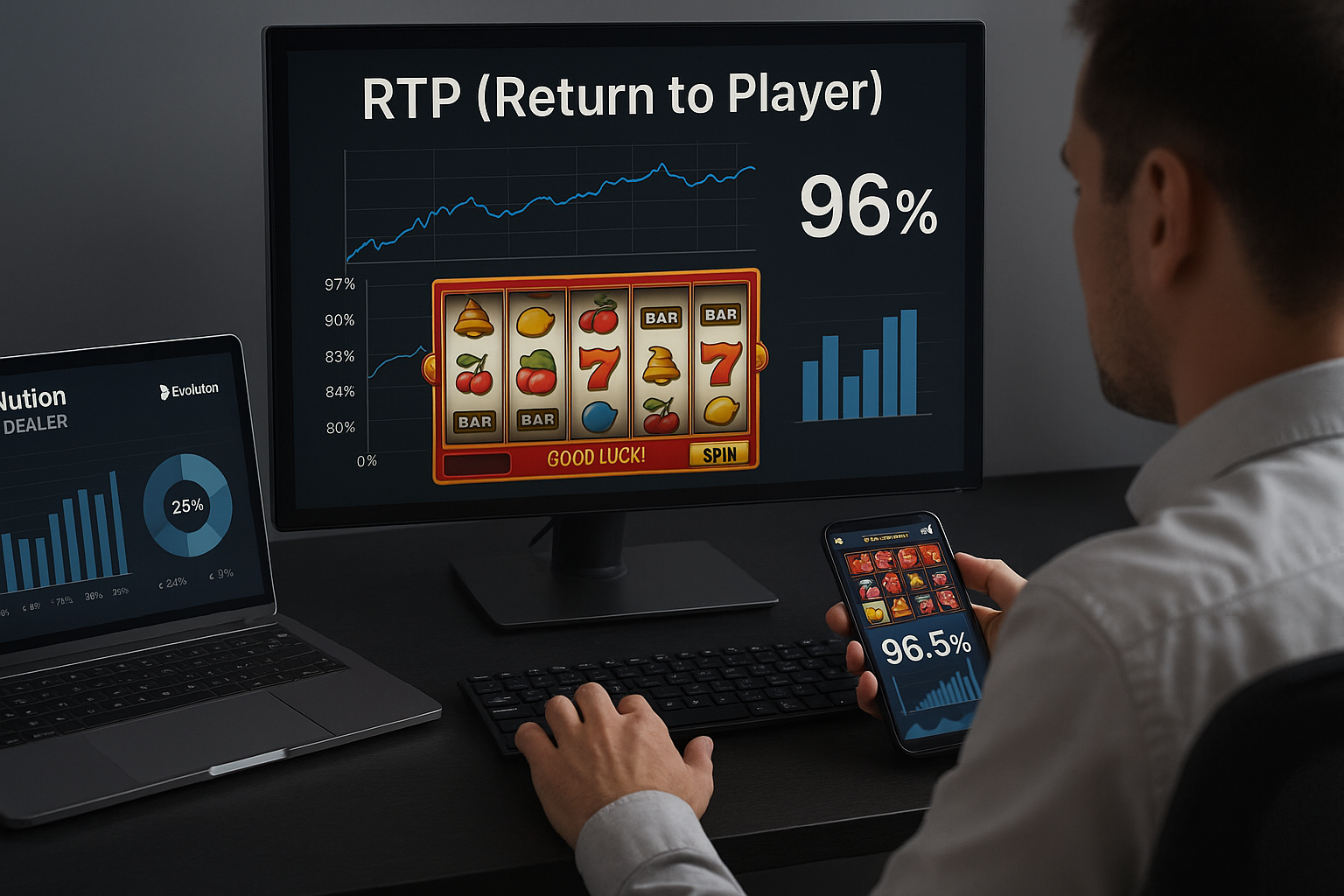
Want a simple way to judge a casino game before you play? RTP, or Return to Player, shows how much a game pays back over time. You can see it in most Online Casino Software inside the info screen. Know the number, set better goals, and protect your bankroll.
The problem is noise. Many pages call a game “loose” with no proof. Some titles list more than one RTP. Your results can swing far above or below the number in the short run. You want clear answers: what RTP means, how it is calculated, and how to use it. You also want quick steps to find it fast before you spin, deal, or buy a bonus.
Let’s discuss in detail!
What Is RTP (Return To Player) In Gambling, And Why Does It Matter?
Simply put, RTP is the percentage of all bets a game returns to players over a long time. Secondly, a higher RTP means the game keeps less for the house on average.
What Is RTP (Return To Player) In Gambling?
RTP stands for Return to Player. It is the long‑term share of wagers a game pays back across millions of rounds. If a slot lists 96% RTP, it aims to return about $96 for every $100 wagered in the very long run. That does not mean you will get $96 back on your next $100. It is a target set by the game’s math and verified in testing. For quick context, European roulette has about 97.30% RTP, while American roulette is about 94.74% because it adds a second zero. Blackjack with good rules and perfect basic strategy can reach about 99%–99.5% RTP.
Why RTP Is A Long‑term Average, Not A Promise
RTP works over huge numbers of plays. Your short session can land far above or below the figure. The reason is variance. Wins and losses come in streaks, and features like free spins or jackpots add big swings. Over many thousands of spins, results tend to move closer to the posted RTP. Over a single hour, anything can happen. Think of RTP as climate, not weather. It tells you the general conditions, not the result of your next spin.
Where You Can See RTP Displayed In Games And Lobbies
Most games show RTP inside the info or paytable screen. Look for an “i” icon, a “?” icon, or a help menu in the game UI. Many lobbies also show RTP on the game tile or on the provider’s game page. In regulated markets, disclosure is often required, so the number appears in rules, tooltips, or footer text.
You may see several versions of the same title (for example, 92%, 94%, 96%). Operators pick a permitted version for their site and market. If you are unsure, open the in‑game rules; that is the authoritative figure for that game on that site. For a quick sense of ranges, many online slots cluster around 94%–97% RTP, while table games depend on rules and player skill.
How RTP Guides Bankroll Planning And Session Length
RTP helps you plan. The quick formula is: expected loss ≈ house edge × total wagered. House edge equals 100% minus RTP. If a slot has 96% RTP, the edge is 4%. If you wager $500 total in a session (for example, $1 bets × 500 spins), the long‑run expected loss is about $20 ($500 × 4%). With the same play at 92% RTP (8% edge), the expected loss doubles to about $40.
Your actual result will vary, but the math helps set budgets and time. Slower play, smaller bets, and higher‑RTP games all reduce average loss per hour. If your goal is longer sessions, choose higher RTP and lower volatility. If you want a shot at big hits and accept swings, higher volatility is fine, but expect wider results around the same RTP.
How An Online Casino Software Provider Documents RTP to Reduce Support Tickets
Clear documentation cuts confusion. An online casino software provider should store RTP, house edge, volatility, hit rate, and version in a single game catalog. The catalog should show the active RTP for each market and the date it was last updated. In the game UI, the same figure should appear in the paytable, a hover tooltip on the tile, and a help page.
A short, plain disclaimer helps: “RTP is the long‑term average return across many plays. Results vary by session.” When the provider ships a new math version, the system should log the change, update the display text, and notify customer support. This keeps the number consistent across the lobby, search, and game pages, and it prevents tickets like “why does the homepage say 96% but the game says 94%?” Consistency builds trust, lowers churn, and reduces time spent answering basic RTP questions.
How is RTP Calculated In Casino Games, And What Does The Math Look Like?
Generally, developers compute RTP using math models and huge simulations of game rounds. Secondly, regulators or test labs verify that figure before a game goes live.
Simple Formula and Walk‑through with $100 Example
The core formula is simple: RTP = expected return ÷ total wagered. Secondly, expected return is the sum of every possible outcome multiplied by its probability. For a $1 spin, if 90% of spins lose ($0), 9% pay $5, and 1% pays $50, the expected return is 0.90×$0 + 0.09×$5 + 0.01×$50 = $0.95. Therefore, RTP = $0.95 ÷ $1 = 95%, and the house edge is 5%.
If you wager $100 in total across many spins, the long‑run average return is about $95, with a $5 expected loss. Moreover, you can see this same math in table games. European roulette sits near 97.30% RTP (single zero). American roulette is about 94.74% (double zero). Blackjack with solid rules and perfect basic strategy often reaches about 99%–99.5% RTP.
Simulations, RNG, And Return Distributions In Slots
Firstly, slot math starts with an RNG (random number generator) that produces unbiased numbers each spin. Secondly, those numbers map to symbol stops on virtual reels with specific weights. Then, the paytable converts symbol lines into payouts. Developers calculate a theoretical RTP from this model and run large simulations—millions of spins—to check that the observed return matches the target within a small margin.
Furthermore, these simulations show the “return distribution,” not just an average. Low‑volatility games cluster around the mean, while high‑volatility games show wide swings with rare big hits. Finally, certified test labs repeat these checks, validate the RNG, and confirm the published RTP before release.
Hit Frequency vs RTP: What Each Metric Tells You
Hit frequency is the share of spins that return any win (even tiny ones). Secondly, RTP is the average money back over time. These are different signals. A game can hit often with small pays and still show 96% RTP. Another can hit rarely but pay larger amounts and also land at 96%.
In practice, many modern online slots display hit frequencies around the 20%–35% range, but design choices can push it lower or higher. Consequently, if you like steady feedback, you may prefer higher hit frequency. If you enjoy swingy play, you may accept a lower hit rate for a chance at bigger features. However, remember that hit frequency does not tell you profit; it only tells you how often the game pays something.
Multiple RTP Versions Per Title And Why They Exist
Many titles ship with several approved RTP settings, such as 92%, 94%, and 96%. Secondly, operators select the version that fits local rules, taxes, or business goals. For example, some markets require a minimum RTP. Others allow a range, so the site may choose a lower or higher version.
Moreover, the active version must match what the in‑game rules and help screen display to the player. If the operator switches versions, the game needs a redeploy or config change, and the label must update everywhere. Finally, reputable studios document version IDs and dates so compliance teams can trace which math model is live.
What To Ask An Online Casino Software Provider About RTP Variants And Change Controls
Ask which RTP versions exist for each title and which are certified for your target markets. Secondly, confirm how the platform stores the active RTP per jurisdiction and keeps it in sync across the lobby, game tile, search, and the paytable. Thirdly, request the test lab certificate ID, version number, and the date of the last verification. Next, check the change‑control process: who approves RTP switches, how the system logs them, and how rollbacks work.
Then, verify alerts: does support get notified when an RTP version changes, and does the content team see a to‑do to update any promo copy? Additionally, ask how bulk changes are handled during migrations or tax updates. Finally, ensure the online casino software provider exposes RTP and version data via API so your CRM, analytics, and responsible gaming tools always read the same, current figure.
What’s The Difference Between Theoretical RTP and Your Actual Results?
Next, you saw how games compute returns; now here is why outcomes feel different. Firstly, theoretical RTP is the long‑run target for the game. Secondly, your actual results can swing above or below it in the short run, especially on high volatility games. Moreover, in Online Casino Software the posted Return to Player comes from the same math, but the RNG, hit frequency, and the house edge create real‑world swings.
Variance And The Law Of Large Numbers In Plain Terms
Variance explains why results jump around even when the average is stable. Secondly, the law of large numbers says that as you play more rounds, your average result moves closer to the true RTP. Moreover, a fair RNG makes each spin independent, so past spins do not change the next spin. However, independence does not mean smooth play; streaks still happen. Additionally, high volatility games pack more of the return into rare, larger wins, so short sessions can be far from the average. Finally, low‑volatility titles spread many small wins around the mean, so sessions feel steadier even with the same house edge.
Session Rtp vs Lifetime RTP: How Results Converge
“Session RTP” is your personal average for a short window, like 300 spins. Secondly, “lifetime RTP” is your long‑term average over thousands of spins. Moreover, lifetime figures usually drift toward the game’s theoretical Return to Player because more data smooths out luck. However, the path can be slow, and high volatility stretches the time needed to converge. Additionally, a few big features can lift or sink a session number even when the underlying house edge is unchanged. Finally, if you track results, expect wide bands early and tighter bands as the count rises.
How Bet Size, Pace, And Bonus Features Affect Swings
Bigger bets increase the dollar size of swings without changing the percentage RTP. Secondly, faster play multiplies exposure, so the same house edge moves your bankroll faster per hour. Moreover, features like free spins, multipliers, and bonus buys shift when wins arrive, which changes the feel of volatility.
However, these mechanics do not change the model unless the feature has a different price or rule set. Additionally, games with low hit frequency tend to bunch wins, so patience matters. Finally, steady stakes and a slower pace reduce stress and help you read your results with more clarity.
When Short‑term Luck Masks True Game Returns
A hot streak can push your session well above the posted RTP, while a cold run can do the opposite. Secondly, short samples hide the real house edge, so avoid judging a title on a few minutes of play. Moreover, an online casino software provider should label RTP as a long‑term average and show clear help text in the game.
However, a white label casino operating in many markets may run different approved versions, which can confuse players if labels are not in sync. Additionally, consistent displays across the lobby and paytable help set fair expectations. Finally, trust the posted figure for the long run, and treat short‑term swings as normal noise from the RNG and volatility.
What Are Typical RTP Ranges By Game Type, And Which Games Usually Pay More?
Most modern online slots sit around the mid‑90s in RTP. Optimal‑strategy table games and some video poker can reach very high returns. Rules and side bets change the numbers in meaningful ways.
Slots: Common Ranges And What “High RTP” Means
In general, online slots cluster around 94%–97% RTP, with many titles targeting about 96%. A “high RTP” slot usually means 97% or more, and rare designs edge toward 99% on paper. That does not make wins certain; volatility still shapes how returns arrive. Low‑volatility slots spread small wins near the average, while high‑volatility slots pack value into rare, larger hits. Bonus buys and feature pricing can tilt the feel without changing the posted figure.
Over time, a 96% slot gives back $96 per $100 wagered on average, while a 92% version gives back $92. Transparent labels in Online Casino Software help you spot which version is live in your market.
Table Games: Blackjack, Roulette Types, Baccarat
Blackjack can reach about 99%–99.5% RTP with strong rules and perfect basic strategy (3:2 payout, stand on soft‑17, double after split). European roulette (single zero) sits near 97.30% RTP; American roulette (double zero) drops to about 94.74%. French roulette with La Partage lifts even‑money bets to about 98.65% RTP.
In baccarat, the banker bet is about 98.94% RTP, the player bet about 98.76%, and the tie bet much lower (around 85%–86% RTP). Side bets often cut RTP sharply, even when the main game is strong. Clear rule summaries in the help screen prevent surprises and keep expectations realistic.
Video Poker: Why Paytables Matter For RTP
Paytables drive video poker returns more than any other factor. Full‑pay Jacks or Better (9/6) offers about 99.54% RTP with perfect play, while reduced paytables fall into the 97%–99% range. Some niche paytables, like full‑pay Deuces Wild, can exceed 100% in theory, but they are rare online and demand flawless strategy.
Small line changes, such as 9/6 to 8/5, can shave a full percent or more from the RTP. Strategy matters too; mistakes push real results below the posted figure. When shopping variants, compare paytables first, then confirm the displayed RTP in the rules to make sure it matches the version on offer.
Live Dealer: Where RTP Matches Digital Rules
Live dealer games follow the same math as their digital twins when the rules match. Live blackjack with the same payouts and options carries a similar RTP to RNG blackjack. Live roulette mirrors European or American returns depending on the wheel. Live baccarat matches banker and player figures from the standard game.
Pace is slower than digital, which reduces total wagered per hour and can soften hourly bankroll swings, but it does not change the RTP. Rule cards and on‑table labels should make the math clear. If a stream adds side bets, treat those as separate wagers with their own, usually lower, returns.
How A White Label Casino Curates Game Mixes By RTP
A white label casino can boost trust and session value by curating its lobby around clear RTP bands and rule quality. High‑RTP categories (for example, 97%+ slots, strong‑rule blackjack, European roulette, banker‑first baccarat) give players a transparent path to better value.
Markets with tax or rule constraints may require lower‑RTP versions; accurate labels and per‑jurisdiction filtering keep the experience honest. Catalog tools from an online casino software provider should store RTP, version IDs, and rule notes, then surface them on tiles and in paytables. Consistency cuts support tickets, supports responsible gaming, and helps players pick games that fit their goals.
How Does RTP Compare To Volatility (Variance), And Which Should You Trust?
In short, RTP is about long‑term payback, while volatility is about how bumpy the ride feels on the way. Also, you need both to match your risk comfort.
Low, Medium, And High Volatility Explained
Broadly, low volatility spreads many small wins near the average return. You see frequent payouts, modest top prizes, and steadier bankroll lines. By contrast, medium volatility mixes small base‑game wins with features that can swing results. You still get action, but streaks feel stronger.
Meanwhile, high volatility stores more of the return in rare, larger hits. You may see long dry spells and then a big bonus that moves your total fast. Importantly, none of this changes RTP on its own. The math only shifts when wins happen. If two games both list 96% RTP, the high‑volatility option will feel choppier, yet the long‑run average stays the same.
Picking Game Style Based On Bankroll And Time
Practically, your budget and session length should guide risk. With a small bankroll or limited time, lower volatility helps you play longer because swings are softer. With a larger bankroll and patience, higher volatility can suit you, since you can ride dry spells to reach big features.
Stake size matters because it scales the dollars at risk without moving the RTP. If $0.50 spins feel calm but $2 spins feel harsh, that is variance at work, not a change in payback. Finally, a slower pace cuts total wagered per hour, which reduces average loss per hour at the same RTP and helps manage stress.
Why Equal‑rtp Games Can Feel Very Different
Fundamentally, RTP is the average of all outcomes; volatility is their spread. Two games at 96% can play in opposite ways. One might hit often with small pays and rare big spikes. The other might be quiet and then deliver large, infrequent wins. Consequently, your short‑term result will depend on where you land in that spread. Features shape this feel: multipliers, free spins, and jackpot shots push value into fewer moments, raising variance. Conversely, line‑hit heavy designs smooth the ride. Therefore, when you compare titles, look at both numbers in the lobby or paytable. Trust RTP for the long arc, and use volatility to pick the experience you enjoy today.
How Do You Check A Game’s RTP Quickly In Online Casino Software?
Firstly, open the game info or paytable and look for “RTP” or “Return to Player.” Secondly, sites often show RTP on game tiles, help screens, or provider pages.
Reading The Paytable/Help Screen Step-By-Step
Start by opening the game and tapping the info icon, help menu, or paytable button. Then scroll to the rules or “game information” section. Look for a clear line that shows “RTP” followed by a percentage, such as 96.00%. Also check whether it lists a single number or a range. A single number means that version is live for you.
A range means the title has more than one approved setting, so the live build should still show the exact active figure in the rules. After that, note any date, build number, or version ID on the same screen. If the label is unclear, take a screenshot and confirm with support before you play more.
Provider Pages, Game Ids, And Version Notes
Then confirm the figure against the provider’s game page. Many studios publish an RTP for each title and show a game ID or internal code. Make sure the game ID in the help screen matches the provider page so you are reading the right entry. Also look for notes like “multiple RTP models available” or “jurisdiction‑specific versions.” If your lobby lists 96% but the help screen shows 94%, trust the in‑game rules because that reflects the live build you are playing. When in doubt, match three items: game name, provider, and version or build ID. This quick cross‑check prevents confusion when titles ship with several models.
Jurisdiction Differences: When Disclosure Is Required
Meanwhile, remember that rules vary by market. Many regulated regions require the RTP to be visible in the game rules or on a linked help page. Some allow several RTP settings for one title, so operators select one that fits local tax or policy.
Others permit a range to be shown in the lobby, but the exact active number must still appear in the in‑game help. If you cannot find any RTP label, check the site’s terms or the responsible gaming page; some operators centralize figures there. If the number remains missing, contact support and ask for the posted RTP for that title in your location.
Internal Process: Mapping Game Metadata To Your Catalog
Also keep your internal data clean if you run a site. Map each title to fields for provider, game ID, active RTP, allowed RTP variants, volatility, hit rate, build number, and market tags. Store one “source of truth” so the lobby tile, search, promo banners, and the help page all read the same value.
Add versioning and audit logs so any change to RTP, rules, or build creates a dated record. For teams, expose these fields through your CMS and API so support, CRM, and compliance see identical data. For a practical pattern, document your Game Catalog RTP Fields and train staff to check them before every release.
When To Escalate A Missing/Unclear Rtp To Compliance
Finally, raise a ticket when something does not line up. Mismatch between the lobby and the paytable is the top trigger. Missing RTP in the in‑game rules is another. A range shown in the lobby without a specific in‑game number also needs review. Out‑of‑date certificates, wrong market tags, or a new build that changes math should be flagged at once. Pause promos for that title until the figure is fixed. Share screenshots, game ID, provider name, and your region so compliance can act fast. Once the issue is resolved, confirm that all surfaces show the same percentage and close the audit loop.
How Does RTP Relate To House Edge, And What Does That Mean For Your Bankroll?
Simply, house edge = 100% − RTP. A lower edge drains your bankroll slower over time.
Quick Conversions (E.G., 96% Rtp = 4% Edge)
Start with the formula. House edge equals 100 minus the RTP. So 96% RTP means a 4% edge. A 94% slot means a 6% edge. European roulette at 97.30% has a 2.70% edge. Strong‑rule blackjack near 99.5% has a 0.5% edge with perfect play.
For money planning, multiply the edge by your total wager. At 4% edge, $1,000 wagered has a $40 expected loss. At 6%, the same action points to $60. These are long‑run averages, not promises for one night. Still, the math helps you compare games fast and set guardrails before you start.
Edge Stacking: How Side Bets And Fees Add Up
Moreover, edges add up across the bets you place. Many table games offer side bets with higher edges than the main hand. Some slots pull a small share to fund progressives. To see the “blended” edge, weight each bet by how much you stake on it. If 80% of your action sits on a 4% edge and 20% sits on a 10% edge, the blend is (0.8×4%) + (0.2×10%) = 5.2%. That small habit can raise expected loss per hour. The fix is simple. Keep most action on the lower‑edge parts of the game. Treat high‑edge side bets as occasional fun, not a core plan.
How Does Online Casino Software Show House Edge?
In practice, good lobbies show both RTP and house edge, or they show RTP with a clear tooltip. A tile might read “RTP 96% (House edge 4%).” The help screen should match the same value and note the version or build ID. A clean data pipeline keeps it consistent across the lobby, search, game pages, and in‑game rules. Labels should be short and plain: “RTP is a long‑term average; results vary by session.” If a game ships with several approved RTPs, the live build must display the exact one in use for your region. Clear, consistent labels cut confusion and build trust.
Bankroll Pacing: Setting Loss Limits By Edge
Finally, use the edge to pace your spend. Expected loss ≈ house edge × total wagered. If your loss limit is $20 and the edge is 4%, plan about $500 in total wagers. At $0.50 per spin, that is 1,000 spins. At 500 spins per hour, you are near a two‑hour session on average. If the edge doubles to 8%, the same $20 limit supports only $250 in wagers. That is 500 spins at $0.50. Slowing your pace also helps. Fewer spins per hour means less total wagered, which reduces average loss per hour at the same RTP. Set a limit, pick lower‑edge games, and keep the plan simple.
Is RTP Usually Better Online Than In Land‑based Casinos, And Why?
Online games tend to list higher RTPs due to lower overheads and strong competition. Transparency is usually better online because information is easier to publish and update across sites.
Cost Structures And Competitive Pressure Online
Online operators do not pay for gaming floors, cabinet hardware, or on‑site staffing at every machine. Studios compete for lobby placement across hundreds of sites, so returning more value helps a title earn traffic. A higher RTP can be a selling point when players compare similar games. Land‑based venues face space limits, hardware costs, and location expenses, which can push margins higher and RTPs lower on popular low‑denomination machines.
Denomination also matters. Many casino floors set tighter returns on penny slots than on higher‑denomination games, while online catalogs often standardize around mid‑90s figures. Competitive pressure and rapid release cycles keep online paybacks in a narrow, player‑friendly band.
Regulatory Reporting And Public Data Sources
Online markets commonly require the posted RTP to appear in the in‑game rules or a linked help page. Accredited labs test math and RNG, and regulators approve a game before launch. Some jurisdictions maintain public registers for certified titles, which helps players and auditors check figures. Land‑based rules vary widely.
Many regions publish monthly or quarterly machine‑level or denomination‑level hold reports, but the data is often aggregated and delayed. Signage on the cabinet rarely shows a precise number for that machine. Online publication standards make it easier to find the figure you need before you wager, while brick‑and‑mortar players may rely on general reports or local knowledge.
How Modern Online Casino Software Surfaces Rtp In The Lobby
Clear presentation starts with a single source of truth. A central catalog holds RTP, version IDs, volatility, and market tags for each title. The lobby can render the same value on game tiles, in quick‑view modals, and inside paytable screens, with the active version shown for the player’s region.
Filters such as “96%+” or “High RTP” help discovery without promising short‑term outcomes. Tooltips explain that RTP is a long‑term average and that results vary by session. Change logs keep values synchronized after updates from providers. With this setup, online casino software can display consistent numbers across web, mobile, and native apps and reduce confusion when a title offers multiple approved RTP models.
Regional Notes: When Land‑based Paybacks Are Disclosed
Disclosure rules depend on the market. Some states or countries publish slot payback by casino and denomination in official reports, giving a rough guide rather than the exact RTP for a specific cabinet. Other regions offer only property‑level hold or no public data at all. On the online side, many regulated jurisdictions require each game to show the active RTP inside the rules, and some mandate a link to certification details or a regulator portal.
When a figure is missing or unclear, the safest move is to consult the game’s help screen, then the operator’s help center, and only then rely on third‑party summaries. Consistent labeling and easy access to rules make the difference between guesswork and informed play.
Do Progressive Jackpots Change RTP, And How Should You Read Those Figures?
Typically, a slice of each bet funds the jackpot. That slice lowers base‑game RTP while raising the “total” RTP when the jackpot grows large. Variance jumps a lot because big wins are rare and swingy.
Jackpot Contribution And Base‑game Returns
Progressive slots route a small part of every wager into one or more pooled prizes. The game then pays less back in the base cycle because that slice is set aside for the pot. When the pot gets big, the extra value shows up in the “total” RTP, not in steady line hits.
- Base‑game RTP: the return from reels and features without the jackpot pot.
- Contribution: a small percent of each bet feeds the pot; this lowers base‑game RTP.
- Total RTP: base‑game return plus expected jackpot value at the current meter.
- Display styles: some games show one “RTP,” others show “base” and “with jackpot” figures.
- Linked networks: shared pools across many sites grow faster and can lift total RTP sooner.
Trigger Rules, Bet Requirements, And EV Windows
Jackpots trigger in different ways. Some are random. Others need special symbols or a bonus wheel. Some “must‑hit‑by” jackpots are guaranteed before a stated meter cap. Rules and bet limits change your odds of qualifying, so they change your expected value (EV) at a given meter size.
- Triggers: random draws, symbol combos, pick‑bonus wheels, or must‑hit‑by ranges.
- Bet qualifiers: some pots require max bet or a side contribution to be eligible.
- Meter math: higher meters add more expected value to each spin.
- Reset value: after a hit, the meter drops to a low “seed” that has little extra EV.
- EV windows: there are sweet spots where the meter is high enough to improve total RTP meaningfully; below that, you are playing near base‑game RTP.
When To Treat Progressives As Entertainment Value
Progressives feel exciting but demand a bigger bankroll and patience. The ride will be choppy, and most of the added value is locked in rare events. If the meter is not high, the game can be tighter than a non‑progressive with the same headline RTP.
- Bankroll needs: long dry spells are common; plan more spins or smaller stakes.
- Session goals: if you want time on device, a steady non‑progressive may suit you better.
- Side costs: extra “jackpot ante” bets increase total wagered and raise hourly risk.
- Read labels: prefer games that show base and total RTP; trust the in‑game help over lobby tiles.
- Quick math: expected loss ≈ house edge × total wagered; a higher total bet plus high variance can drain funds even when total RTP looks attractive.
- Mindset: enjoy the chase, but avoid judging value on one short session; treat the jackpot shot as fun unless the meter is unusually high and rules are in your favor.
Who Checks Game RTP For Fairness, And How Can You Verify Transparency?
Accredited test labs audit games, and regulators approve them before release. Reputable operators publish RTPs and update them when a game version changes.
Testing Labs And Certification Basics
To start, every approved game goes through independent testing. Labs review the math model, verify the RNG, and run large simulations to confirm the stated RTP. They check that long‑run returns match the target within tight tolerances. They also validate edge cases, bonus logic, and payout rounding.
After testing, the lab issues a report and certificate tied to a specific build or version. That certificate moves to the regulator for final approval. As a player or operator, you can look for version IDs, build numbers, and dates in the help screen or technical summary. If a game is patched, the new build needs fresh validation or a documented assessment that the math did not change.
Regulator Rules And Minimum RTPs By Market
In many markets, regulators set rules for disclosure and sometimes set minimum RTPs. Some jurisdictions require the exact RTP to be shown in the in‑game rules. Others allow a range in public materials but still require the active number to appear inside the game. Oversight can include pre‑approval of new titles, change‑control audits, and periodic reviews of live data.
When a title offers multiple RTP models, the regulator expects the operator to select an approved version and display it accurately for each region. If a game updates its math, the regulator may require re‑certification before it can go live again. Clear records—who approved what, and when—are essential during inspections.
Publishing Policies, Versioning, And Changelogs
In practice, transparent operators treat RTP like any other critical spec. They publish the active RTP in the paytable and mirror the same figure in the lobby, search, and game pages. They also keep a changelog that notes version switches, certificate IDs, markets affected, and effective dates. A single “source of truth” prevents drift between pages and reduces support tickets. Good policy includes three checks: match the game ID to the provider’s listing, confirm the build or math version, and verify that the posted RTP matches the live configuration. When marketing materials mention RTP, they should pull that value from the same data store to avoid stale numbers.
White Label Casino Compliance Checklists
For a white label casino, compliance scales across many brands and markets. A simple checklist helps keep risk low. Map each title to provider, game ID, active RTP per jurisdiction, allowed variants, volatility tag, and certificate references. Confirm that the in‑game rules display the same RTP your lobby shows. Record who approved any change, when it went live, and what markets it touched.
Run nightly or weekly audits to catch mismatches after provider updates. Train support to collect screenshots and basic details (game name, ID, market) when players ask about RTP. During regulator reviews, produce your version history and changelogs on request. Consistent data, clear labels, and documented processes prove transparency and build player trust.
Conclusion
RTP tells you how much a game pays back over time, while volatility explains how that payback arrives. Use both to set fair expectations. Check the in‑game rules for the active RTP, note the house edge (100 − RTP), and choose rules and stakes that fit your budget. Treat progressives as a higher‑variance choice unless the meter is unusually high. Trust the posted figure for the long run, and remember that short sessions can land above or below the average.
For operators, clear labels, version logs, and one source of truth build trust and reduce support load. Map RTP, volatility, and certificate IDs to your catalog, and keep every surface—lobby, search, tiles, and help screens—in sync. For players, simple habits help: verify RTP, avoid high‑edge side bets, and pace your play. If you want patterns and checklists you can adapt, our website hosts practical resources for game catalogs, disclosure text, and compliance workflows aligned with Online Casino Software best practices. Explore them when you’re ready, and use what fits your goals.
Can Casinos Change A Game’s RTP After Launch?
Sometimes, yes. Any change goes through approvals, version control, and a fresh deployment. Many games ship with several approved RTP settings, and operators choose one per market. Switching versions is a controlled update that must refresh the in‑game rules and any lobby labels so the posted number matches the live build. Regulators or test labs may review the change before it goes live, and the platform should log who approved it and when.
Does Bet Size Affect RTP or Only Volatility?
Bet size usually does not change RTP. It changes the size of swings and how fast your bankroll moves. RTP is set in the math model, so raising the stake scales dollars, not the percentage. Bigger bets make wins and losses larger, which feels swingier even when payback is the same. Side bets or jackpot antes are separate wagers with their own returns and can raise overall risk. Some features need a minimum stake to qualify, but the base‑game RTP stays constant.
Is A Higher RTP always The “Best” Choice?
Often, but not always. Rules, features, and volatility can matter more for a short session. A 97% high‑volatility slot can feel harsher than a 96% low‑volatility title because returns arrive in bigger, rarer chunks. Table game rule sets also shift value, and side bets can lower it even on strong cores. Choose by RTP plus variance, your budget, and your time goals, not by RTP alone.
Where Do I Find Trustworthy RTP Numbers For Table Games?
A: Start with the game’s rules in the help screen or table info. Look for regulator‑approved text. Digital and live dealer titles usually show RTP in‑game, and you can match it to the provider’s listing. Rule details such as blackjack S17 vs H17 or the roulette wheel type change returns, so confirm them. Some regulators host public registers or certificates you can cross‑check. For land‑based venues, official payback reports by state or country may be the only source.
Recommended
 Maximize Profits with Our Customizable Agent System: Unlocking New Earning Opportunities
Maximize Profits with Our Customizable Agent System: Unlocking New Earning Opportunities
 Malaysia’s Most Popular Online Casinos Powered by TT Wonders
Malaysia’s Most Popular Online Casinos Powered by TT Wonders
 Top Features to Look for in an Online Casino Platform


